
Brazil
 Photography
We are currently only offering this tour as a Custom Tour. Please Contact Us for more information
Brazil is a massive country with a correspondingly huge bird list, numbering nearly 1900 species. This ranks it as third in the World in terms of bird species alone. So, with such a vast country at our disposal where best to base a photo tour? For this reason, we offer multiple options in Brazil that are totally different from each other. On this tour, we have carefully selected sites within the Atlantic Forests of Southeast Brazil. This part of Brazil comes equipped with a large selection of species that are not found away from there. Brazil really is a bird photographers paradise, and the existence of a large active community of Brazilian photographers have made this part of Brazil a joy to visit for the bird photographer. It has a wonderful variety of reserves catered to their needs, with plentiful good feeder set ups to keep us busy, making this is a natural choice for a photo tour.
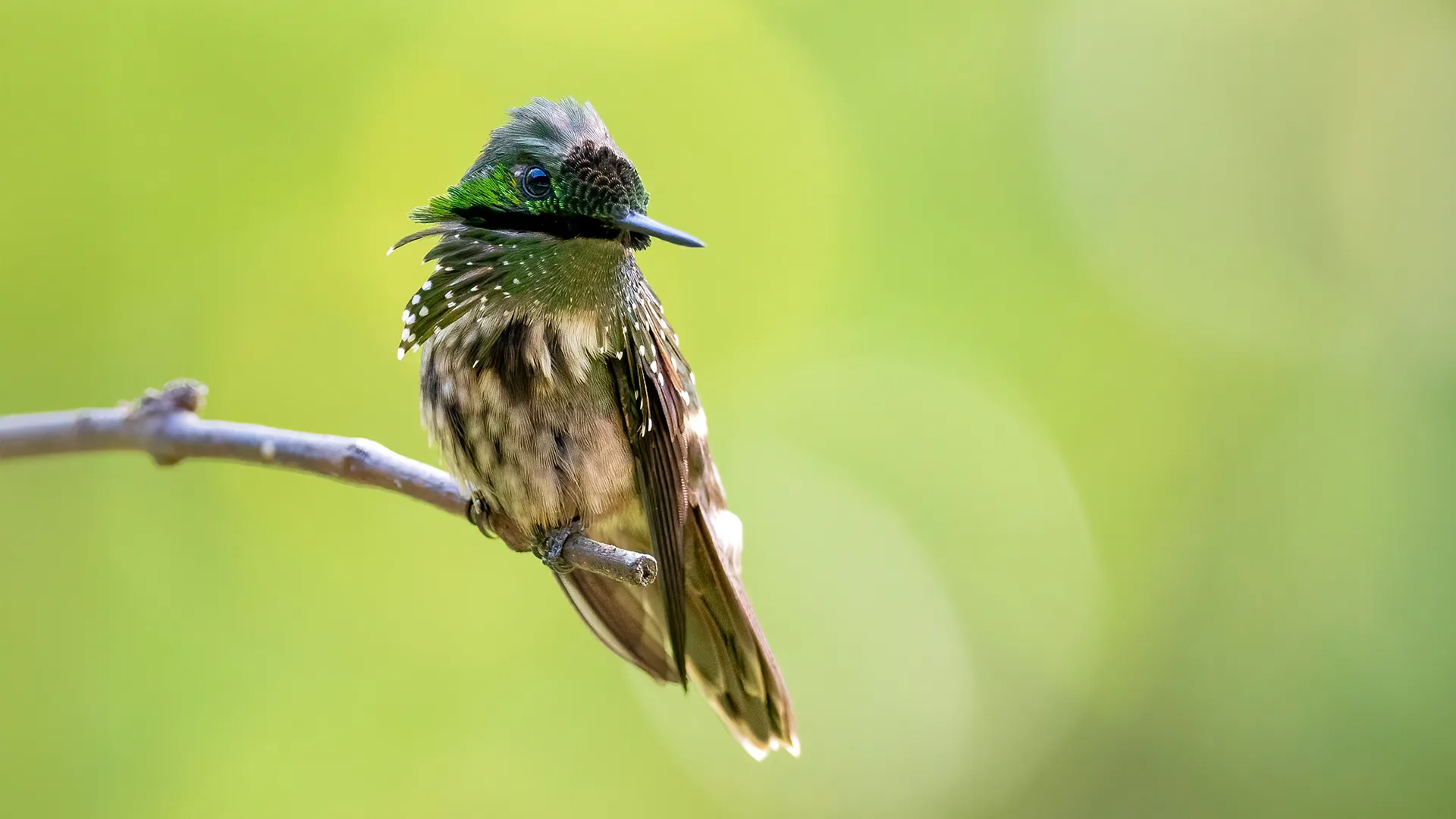
Like many South American photo tours, hummingbirds are often front and center, with a series of fantastic feeders and flowers offering up thrilling local specialties to photograph, like both Frilled and Festive Coquettes, Stripe-breasted Starthroat, Black Jacobin, and Brazilian Ruby. Following in the considerable wake of the hummingbirds, are a heady array of extremely striking tanagers, all of which are only found in Southeast Brazil, like the multicolored Green-headed Tanager, bright scarlet Brazilian Tanager, ostentatious Red-headed Tanager, and stunning Gilt-edged Tanager. As if that were not enough, other very colorful targets include Red-breasted Toucan, Pin-tailed Manakin, and the outrageous Blond-crested Woodpecker. If you wish for a tour where you can photograph many spectacular species not possible anywhere else, this is the tour for you.
We offer two totally different photo tours in Brazil. These two tours can be taken together for one longer, ultimate Brazil Photo Tour. The other tour, Brazil: Pantanal Photo Tour, visits the world’s largest wetland, and covers a completely different suite of birds like Hyacinth Macaws and Toco Toucans, plus an excellent chance to photograph Jaguars and Giant Otters too!



Price
To Be Announced
Length
15 Days
Physical Difficulty
Easy-Moderate
Pace
Easy-Moderate
Focus
Photography
Group size
6 + 1 leader
TBA (Aug or Sept, to link with the Pantanal Photo Tour)
Price: TBA
This tour links with BRAZIL: Pantanal Photo Tour.
Starting City
São Paulo (GRU)
Ending City
São Paulo (GRU)

The tour begins this evening in Guarulhos, a satellite city of São Paulo. We’ll have one night in a good hotel that provides a free airport shuttle. No birding is planned for today.
We start the tour by driving west across the busy São Paulo metropolis, heading towards Trilha dos Tucanos. This small lodge has become a must-visit spot for birders and bird photographers alike, and we spend two nights here. At their feeders, a main attraction is the incredible Saffron Toucanet which is a regular visitor, together with plenty of other great birds like Red-breasted Toucan, Blond-crested and Golden-fronted Woodpeckers, Maroon-bellied Parakeet, and various species of tanager. Some years, their moth trap attracts some incredible skulkers like Giant and Tufted Antshrikes, Crescent-chested Puffbird and even the very shy Brown Tinamou; we need some luck to get these beauties but chances are good. The forest surrounding the lodge is home to plenty of species that we won’t have chances for during the rest of the trip, namely the local Black-fronted Piping-Guan, Atlantic Royal Flycatcher, Scalloped Woodcreeper, Ochre-collared Piculet, Mantled Hawk, and the tiny Oustalet’s Tyrannulet. Apart from these specialties, plenty of other Atlantic Forest range-restricted species can be found here including Tawny-browed Owl, Star-throated Antwren, Squamate Antbird, and maybe even the difficult White-breasted Tapaculo.
We will have a couple more hours in the early morning to visit the moth trap and feeders or to target any species along the trails before departing towards the coastal city of Ubatuba. This means we have a long drive, but we can have some birding stops once pass through São Paulo. We will stay three nights in Ubatuba.
Once of the main attractions in the entire region is Folha Seca with its amazing feeders. Swarms of hummers are always present with the gaudy Festive Coquette often being the favorite. Others that visit include Saw-billed Hermit, Violet-capped Woodnymph, Brazilian Ruby, Sombre Hummingbird, Versicolored Emerald, and White-chinned Sapphire. The fruit feeders are less predictable, as sometimes they are very busy and other times rather quiet, but we should see at least a few neat birds such as Green-headed, Ruby-crowned, Brazilian, and Azure-shouldered Tanagers, and Violaceous Euphonia. Forested-covered mountains that come down to the sea make this part of the Atlantic coast truly beautiful. Various private reserves and quiet side roads at the base of the mountains offer easy birding with some of the best species the Atlantic Forest has to offer. Numerous antbirds are possible, many of which are truly handsome and often surprisingly easy to see compared to other parts of the Neotropics – a few in particular that we will be looking for are Scaled and Ferruginous Antbirds, Spot-breasted Antvireo, Tufted and Spot-backed Antshrikes, and Star-throated Antwren. Two of the strangest (and coolest!) tapaculos in the world also inhabit the forest here, the strikingly-patterned Spotted Bamboowren and the perky Slaty Bristlefront with its unforgettable song. This is the best place in the world to see the diminutive Buff-throated Purpletuft, an endangered species, and we stand a great chance of finding Black-cheeked Gnateater, one of the most distinctive members of this small family. Other possibilities here include Robust, Yellow-fronted, and Yellow-throated Woodpeckers, Swallow-tailed, White-bearded, and Pin-tailed Manakins, Bare-throated Bellbird, White-necked Hawk, Maroon-bellied and Plain Parakeets, Black-capped, White-eyed, and Ochre-breasted Foliage-gleaners, Crescent-chested and Buff-bellied Puffbirds, and Red-necked Tanager.
Departing early from our hotel, we will do some birding near Serra do Mar State Park where we can hopefully pick up Hooded Berryeater or Bare-throated Bellbird. Later we move on to a small birding guesthouse where the local owner has managed to attract a few nice birds to his garden. He puts out food for the difficult Red-and-white Crake, which is not guaranteed, but it is our best chance for this hard species. After lunch, we head to the foothills of the Serra da Mantiqueira, where we spend two nights.
After an early breakfast, we’ll drive about 30 minutes to a rough road that enters the higher parts of Itatiaia National Park. The stunted forest and scrub here hosts a very different set of birds, and the eerie calls of Black-and-gold Cotingas ring out through the mist. Hearing them is easy, but seeing them often takes a lot of persistence and patience. We’ll target several species along the lower parts of the road like Rufous-tailed Antbird, Large-tailed Antshrike (two more amazing antbirds!), Serra do Mar Tyrannulet, and Black-capped Piprites. Forest patches can be quiet until a mixed species flock comes whirling through, and then we can be inundated with birds like Diademed and Brassy-breasted Tanagers, Buff-throated and Bay-chested Warbling-Finches, Pallid Spinetail, Rufous-backed Antvireo, Sharp-billed Treehunter, and White-browed Woodpecker. We’ll check a regular lekking site for Green-crowned Plovercrest, where several males of this superb-looking hummingbird usually perch and chirp incessantly. Farther up in stunted forest and scrub, we’ll try various spots for the endemic Itatiaia Spinetail, and be sure to look for Araucaria Tit-Spinetail in its eponymous grove of trees. In the afternoon, we can bird a side road lower down the valley that passes through pastures and light woodland. The birding here is easy and offers very different birds like the rare and local Giant Snipe, comical Toco Toucans, screeching Curl-crested Jays, handsome White-eared Puffbirds, dancing Streamer-tailed Tyrants, and the aptly named Firewood-gatherer.
We might need to head back up the amazing Algulhas Negras road if we missed any big targets, but we can only spend a short time before beginning a long drive into the interior of the country. We leave behind the humid Atlantic Forest and head into the Cerrado biome. This is mostly a travel day, but we may have a bit of time for some birding stops along the way before reaching the town of São Roque de Minas, where we spend three nights. We usually arrive early enough for some afternoon birding in dry forest not far from town but it will depend on our timing.
This park is simply magnificent. The Canastra plateau, with its scenic escarpments and waterfalls, dominates the area, and there is a mosaic of habitats including gallery forest, rivers, wooded farmland, scrubby Cerrado, and tall, undisturbed grasslands. The area is one of the last strongholds for the Brazilian Merganser, one of the world’s rarest ducks; while we have seen it on many of our tours, in recent years sightings have become less frequent (though we do tend to find them on more than half our visits). Even if we aren’t fortunate enough to see one, there are plenty of other birds and animals to fill our days here. During one full day, we’ll bird areas at the base of the escarpment. There are numerous lookouts to scan for “ducks”, but there are plenty of other birds to see while we do so such as Whistling Heron, Buff-necked Ibis, Yellow-chevroned and Golden-capped Parakeets, White-eared Puffbird, Narrow-billed Woodcreeper, Rufous-fronted Thornbird, Pale-breasted Spinetail, Black-capped Antwren, Plain-crested Elaenia, Yellow-browed Tyrant, Plush-crested Jay, Yellowish Pipit, Blue Finch, Plumbeous and Dubois’s Seedeaters, Black-throated Saltator, and Chopi Blackbird. We’ll walk along a trail to the base of the impressive Casca D’Anta Waterfall, where Great Dusky Swifts can usually be seen clinging to the cliffs. The trail can also be productive for some tough birds like Flavescent Warbler and Chestnut-headed Tanager, and we can usually track down a singing male Helmeted Manakin. On the other day, we’ll bird the windswept grasslands on top of the escarpment, which is a world apart from anything else on this tour. Cock-tailed Tyrants zip back and forth over the grass, Ochre-breasted Pipits perform cool display flights, and cute grassland specialists like Sharp-tailed Tyrant and Black-masked Finch can usually be found with a bit of searching. It’s not unusual to see Giant Anteaters, and Maned Wolf is a possibility as well. We’ll reach the top of the waterfall we visited the previous day, which is another spot to look for Brazilian Merganser. If the water level is low enough, we may be able to cross the river and try to flush up some Sickle-winged Nightjars. Other birds we have a chance for today include Collared Crescentchest, Gray-backed Tachuri, Rufous-winged Antshrike, and Tawny-headed Swallow.
One last long drive today, about 6.5 hours total, but we’ll stop occasionally for breaks and eventually some birding; some years a local park in the middle of Belo Horizonte has the local and rare endemic Three-toed Jacamar which we may try to see based on the latest info about it. We typically arrive in Caraça by mid-afternoon; it is a private nature reserve protected by the Catholic Church set in impressive mountain scenery. The reserve protects close to 28,000 hectares of land, providing a pristine and safe home for some of the most beautiful animals of the region. The most famous of the species here is the bizarre, rare, and gorgeous Maned Wolf. It's a canid unlike any other in the world with long legs that evolved to be able to see above the tall grass of the Cerrado plains of central Brazil. This wolf is rare and difficult to see in the wild but... in 1980, the head priest of the Caraça Monastery got very interested in one individual of this wolf that would come during the night to steal food leftovers from the church’s trash cans. The priest decided that such a beauty deserved better and started feeding it meat every night and little by little the wolf started approaching closer and closer to him. However, it kept faithful to its wild nature and never turned into a pet; it only snatched the food away and then shyly ran away into the forest. This ritual was happily continued to this day. Hundreds of visitors come to this beautiful corner of Brazil to experience the feeding ceremony of this amazing beast. It takes place directly in front of the church every night. Visitors gather around the patio, eagerly waiting for the wolf to make its appearance from the shadows along the main stairway of the church. The wolf does not show up every night, and sometimes it comes very late after most people have gone to bed, but usually at least two out of three nights it will come. We will have two nights in this unique place, so we have a very good chance. Some nights even a Brazilian Tapir comes in to eat fruit and vegetables that the caretaker puts out.
We have a full day to bird this reserve surrounded by stunning scenery, and we have several targets to try for. The best bird here for some might be the local country endemic Hyacinth Visorbearer, the males of which are stunningly beautiful. Other targets here include Serra Antwren, White-breasted and Rock Tapaculos, Gray-eyed Greenlet, Black-capped Antwren, the mighty Large-tailed Antshrike, the tiny endemic Hangnest Tody-Tyrant, and the vocal Pale-throated Pampa-Finch. Occasionally the stunning Swallow-tailed Cotinga can be seen – let’s hope for some luck!
We will have a few more hours of birding, trying to improve photos or targeting any species we still need. Later in the morning, we will have enough time for showering and repacking before departing towards the International Airport of Confins located north of Belo Horizonte where the tour ends.
Day 1: Arrival in Sao Paulo. After arrival in Sao Paulo, you will be transferred to a nearby airport hotel for the night.
Days 2-3: Monte Alegre. On Day 2, we will journey 80 miles (130km) north out of Sao Paulo to the small town of Monte Alegre. Monte Alegre was built during a coffee boom, that continues today. Indeed, we will be staying at a very comfortable lodge on a farm that is still producing coffee. It is within an area known for its rolling countryside and scenic, forested hills, and the latter is where we’ll find the birds we are after. We’ll spend two nights at a lodge in the mountains, which has been connected to the birding community for some time, and is particularly famed for its collection of hummingbirds that frequent either the garden flowers or the on-site feeders. A whopping fifteen hummingbird species are regular, including half a dozen that are specialties of the Atlantic rainforest, Black Jacobin, Planalto and Scale-throated Hermits, White-vented Vioetear, Stripe-breasted Starthroat, and Violet-capped Woodnypmh. Other hummers that feature regularly there are Glittering-bellied and Sapphire-spangled Emeralds, Swallow-tailed Hummingbird, and Versicolored Emerald. Away from the star hummingbirds, there is plenty of other birds on the property that we may find, like Toco Toucan, Green-barred Woodpecker, Curl-crested Jay, and Red-legged Seriema, and a host of tanagers. Some of the tanagers that inhabit the farm include, Ruby-crowned, Sayaca, and Burnished-buff Tanagers. Two nights will be spent in the spa town of Monte Alegre.
Days 4-5: Itatiaia National Park. After some final photography in Monte Alegre on Day 4, we will make the long drive (5 hours) northwest to Itatiala National Park, a world-famous birding hotspot. Itatiaia is Brazil’s oldest national park, situated in the scenic Mantiqueira Mountain range that spans three Brazilian states. We will have a full day in the area on Day 5 to explore this well-forested area, at an elevation just over 3300ft (1000m). Some of the birds we hope to shoot, will be the miniscule Frilled Coquette, handsome Black-eared Fairy and striking Brazilian Ruby. Aside from hummingbirds, which will always be in our daily thoughts and plans, we have birds like Dusky-legged Guan, Red-breasted Toucan, Blue Dacnis, Brazilian Tanager, and the bold Green-headed Tanager to think about too. Two nights will be spent at a wonderful location inside the park, with feeders and birds on our doorstep.
Day 6: Itatiaia to Ubatuba.
On this day we will move from one legendary birding area to another, Ubatuba, a coastal area in Serra do Mar State Park, with coastal forests boasting more than 500 bird species, any of which are Southeastern Brazil specialties. After a four hour drive, we will check into Ninho da Cambacica Lodge for a two-night stay. We will have the afternoon of this day and a full day after to shoot on the property.
Day 7: Ninho da Cambacica Lodge. This luxurious lodge is a wonderful place to stay and then you have the birding opportunites, making it an unforgettable place. Two species of coquette are regular (Festive and Frilled), as is White-chinned Sapphire. Other birds on the lodge grounds include Plain Parakeet, Red-and-white Crake, Bananaquit, and Rufous-tailed Jacamar, plus Blue-naped Chlorophonia, Chestnut-bellied Euphonia, Green Honeycreeper and Yellow-fronted Woodpecker. Walks deeper into the forest may also yield three species of manakin (including White-bearded and Swallow-tailed Manakins), or even White-necked Hawk).
Day 8: Ubatauba to Macuquinho Lodge. We will move to our next major base of the tour on this day, Macuquinho Lodge, a 3-hour drive southeast initially along the coast then inland. However, we will break the drive by visiting a hummingbird garden just an hour along the coast from there, which has fruit feeders. Here we will be shooting species like Saw-billed Hermit (another local specialty), in addition to Black-throated Mango, White-chinned Sapphire, and Glittering-throated Emerald. At the other feeders, we be on the lookout for a selection of tanagers, among them intriguing species like Golden-chevroned, Brazilian and Red-necked Tanagers, all of which are regional endemics, confined to these Atlantic forests. At the end of day we settle into our new accommodation, Macuquinho Lodge for a two-night stay.
Day 9: Macuquinho Lodge. We will have a full day to cover the feeders at this epic photography destination. This recently built lodge is situated near Serra do Mar State Park, and is loaded with hummingbird and fruit feeders, and also has photography blinds on the property too. Among the hummingbirds on offer are the incredible Festive Coquette, the tiny Amethyts Woodstar and striking White-throated Hummingbird. However, it is for its tanagers that this property is most revered for; Black-goggled, Gilt-edged, Brassy-breasted Tanagers all occur there, as does Black-legged Dacnis and Violaceous Euphonia. There are also flat trails and small wetlands in the area too, if you would like to walk around. Kingfishers and egrets are regularly found in the wet areas while, the rare antbird, the São Paulo Marsh Antwren occurs in the local forest along with Swallow-tailed Manakin and Surucua Trogon.
Day 10: To Mochileiros Lodge. On this day, we will travel south of the enormous city of Sao Paulo to Mochileiros Lodge in the coastal town of Peruíbe. This is run by an expert biurd guide and designed with photography in mind too. Over 320 species are known from the region with more than a third within the Atlantic forest we will be shooting in. Two nights will be spent in this wonderful location.
Day 11: Mochileiros Lodge. Today we will have a full day to explore the lodge grounds and nearby photo hotpots. One of our main targets here will be one of South America’s most dramatic woodpecker species, Blond-crested Woodpecker. Of course, hummingbirds will feature too, many of which will by now be familiar, like Black Jacobin, Violet-capped Woodnymph, and Swallow-tailed Hummingbird, as well as the Sombre Hummingbird, which should be new for us. Once again, tanagers are well-represented as this Atlantic forest site, like they always are, and may include some new ones like the stunning Chestnut-backed and Black-backed Tanagers, both of which are way more beautiful than their drab names would suggest! Other birds we came across include Slaty-breasted Wood-Rail, a really striking, handsome local race of Channel-billed Toucan, White-necked Hawk, Azure Jay, and Buff-bellied Puffbird.
Day 12: Mochileiros Lodge to Trilha dos Tucanos Lodge via Sitio Espinheiro Negro Lodge. Our main focus for the day will be to spend time Sitio Espinheiro Negro Lodge, inland from our last lodge. This private reserve boasts a 90% coverage with lush, verdant Atlantic rainforest and bird list reaching more than 360 species. It also has feeders offering hummingbirds plus tanagers and toucans too. Red-breasted Toucan is the star attraction here, with a supporting cast including Green-backed Trogon, Campo Flicker, and a long list of tanagers, including Rufous-headed, Green-headed, Red-necked, and Brassy-breasted Tanagers. Purple-throated Euphonia is also regularly seen on the property. At the end of the day, we will check into Trilha dos Tucanos Lodge for the final three nights of the tour, a 170 acre (70-hectare) reserve 3 hours southwest of Sao Paulo, boasting more than 350 bird species, and is considered one of the premier destinations for birding and bird photography in Brazil. We will be staying in the extremely nice chalets on site.
Days 13-14: Trilha dos Tucanos Lodge. As this is such an important site for our photo objectives, we have dedicated two full days here. This beautiful place is most famous for its tame toucanets (Saffron Toucanet), and Spot-billed Toucanet, another Atlantic forest specialty also occurs on the property, as does Maroon-bellied Parakeet, Black-throated Grosbeak, Azure-shouldered, Olive-green and Magpie Tanagers, and several owls species, which can be looked for at night for the keen (Tawny-browed Owl and Black-capped Screech-Owl). A predatory mammal, the Tayra, also regularly comes to rain the feeders too.
Day 15: Return to Sao Paulo/Departures. After some final shooting in the morning, we will freshen up at the lodge and leave in the afternoon to connect with evening flights out of Sao Paulo.
PACE: Relaxed to moderate. It’s important to be out early to take advantage of the cooler temperatures and better light. Breakfast will typically be at about 5:30-6:00am. On many days there will be some downtime either around lunchtime, if activity is low, or at the end of the day before dinner, when only bad light remains for the day. This time can be used to download and back up photos or to rest around lunch or dinner time. There are some long drives on this tour, with drives of around 5 hours to Itatiaia on Day 4 and of around 4 hours to Ubatauba on Day 6 and to Mochileiros Lodge on Day 10, and of 3 hours to Sao Paulo airport on Day 15. There may be the odd packed meal on the tour, but no more than two at the most.
PHYSICAL DIFFICULTY: Easy to Moderate. For the most part we will be photographing at blinds or feeders, with only short walks required. For those who wish to do some trail walking for other birds such as trogons and manakins, there may be some short trail walks, along forest trails that will be uneven and have some occasional short steep sections. These are optional, however, and we will make them short.
CLIMATE: Usually pleasant to warm in the lower elevations, and cool to occasionally cold in the mountains. Occasionally, cold fronts bring cooler temperatures into the region. The coldest temperatures in the mountains may go as low as around 45-55°F/7-13°C early in the morning, although it will generally be warm and pleasant. Much of this tour is spent in the mountains, except for some limited time in the lowlands around Ubatuba. Some rain can be expected.
ACCOMMODATION: Generally good to very good throughout. The birding lodges used on four nights are more rustic (Macuquinho and Mochileiros lodges days 8-11), although all have private, en-suite bathrooms, and full-time hot water. Electricity is available everywhere 24 hours a day. Wifi is available at all of the places stayed.
PHOTO PHILOSOPHY: This will be a combination of photographing at feeders (the majority of the tour – every day), with some blinds (a few days only), and there will also be the chance on most days to walk around do some trail work if you want while others can stay at the feeders or rest.
GEAR: A long telephoto lens (500 or 600mm) or a good 300 or 400mm with a teleconverter is recommended for smaller birds, or a high-end zoom is ideal. Since we spend so much time at feeders, a tripod or a monopod can be very useful but not essential. As we will largely be photographing in low light, forested environments, the biggest challenge will be low light at times, so we may need to shoot at higher ISOs in some places. However, many of the feeders are well set up with more light around these than when some might choose to shoot within the deeper forest (optional). Although there is low light at the end of the afternoons, this is often when you get a late flurry of pre-roost activity at hummingbird feeders in particular. Therefore, you may wish to carry a flash for this, for the places where this is permitted (the guide will inform you where and where not, you can use these).
TRAVEL REQUIREMENTS: A valid passport is required; the passport must be valid for at least six months past your intended stay. Visas are required for US, Canadian, and Australian passport holders, but they can be obtained online; do this well in advance of the tour as it can take a few days or more. For other nationalities, please check with the nearest Brazilian embassy or consulate for current requirements. Travel requirements are subject to change; please double check your visa requirements a few weeks before you travel.
WHAT’S INCLUDED?: Tips to drivers, local guides, and lodge staff; accommodation from the night of day 1 to the night day 14; meals from dinner on day 1 (unless you arrive too late for dinner service) to lunch on day 15; safe drinking water throughout; Tropical Birding tour leader from the evening of day 1 to the afternoon of day 15; ground transport for the group to all sites in the itinerary from day 2 to day 15 in a suitable vehicle with a local driver (for small groups the guide may also be the driver); entrance fees to the sites mentioned in the itinerary; a printed and bound checklist to keep track of your sightings/photos.
WHAT’S NOT INCLUDED?: Optional tips to the tour leader; tips for luggage porters in city hotels (if you require their services); international flights; snacks; additional drinks apart from those included; alcoholic beverages; travel insurance; excursions not included in the tour itinerary; extras in hotels such as laundry service, minibar, room service, telephone calls, and personal items; medical fees; other items or services not specifically mentioned as being included; Expenses that could arise due to the delay, change, or extension of the trip due to circumstances beyond Tropical Birding’s control (weather, flight delays/cancellations, lost luggage, road closures, etc.).
Want to learn more? Fill this form and we’ll be in touch.


Reviews
There are no reviews yet.