
United States
 Photography
We are currently only offering this tour as a Custom Tour. Please Contact Us for more information
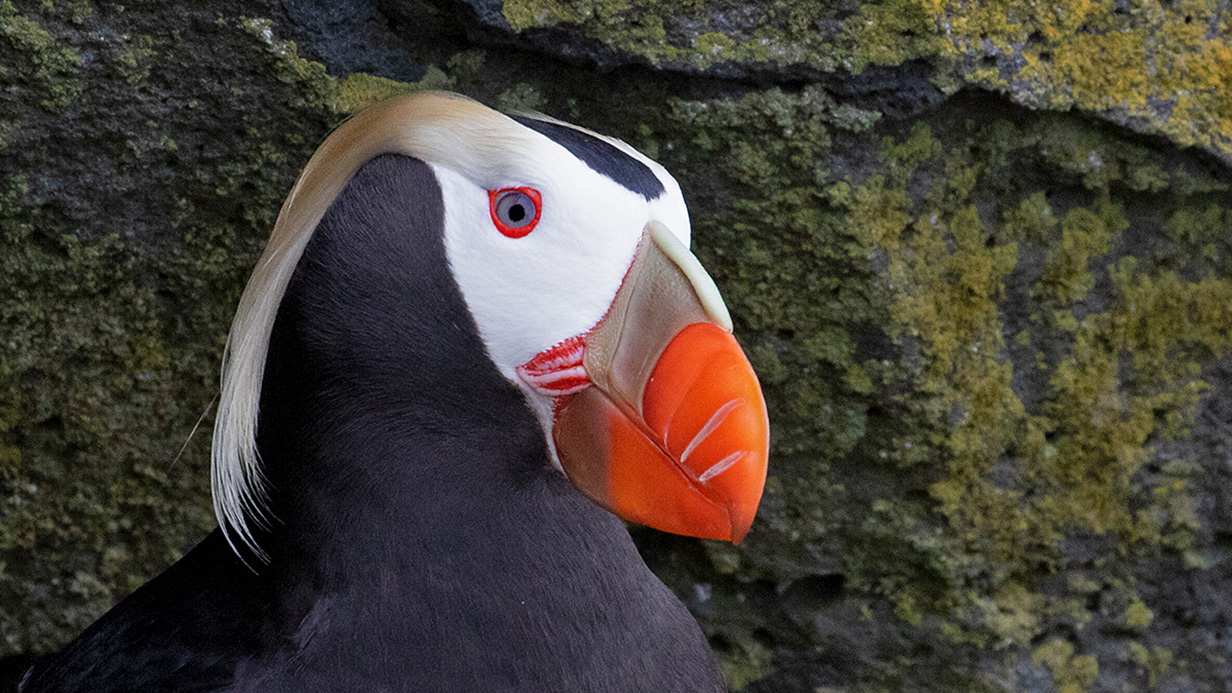
Alaska is a vast and beautiful US state with an incredible array of photographic opportunities, especially when it comes to breeding birds in the summer months. Though the actual species quantity isn’t all that high, the quality is far beyond measure. Breeding shorebirds like Red Knot and Pacific Golden Plover, breeding waterfowl like King, Spectacled and Steller’s Eiders, and songbirds like Bluethroat more than make up for the relatively low number of species. And those birds are just the tip of the iceberg. The extension to St Paul Island adds chances to photograph cliff-nesting seabirds close at hand like Horned and Tufted Puffins too. There is an amazing diversity of opportunities, and this tour aims to photograph as much as possible while looking for great quality. If you wish to see more of the species, we recommend checking out our Alaska: Breeding Birds and Mammals in the Tundra tour.




Price
From $13990
Length
14 days (17 days w/ extension)
Physical Difficulty
Easy to moderate
Pace
Easy to moderate
Focus
Photography
Group size
6 + 1 Leader
Main Tour: 11 – 24 June
$13990; single supplement: $2330
Extension: 24 – 29 June
Please contact us for details of the extension. Dates listed are based off of current flight schedules, which are subject to change.
Starting City
Anchorage
Ending City
Anchorage

The tour will begin on this afternoon. Guests should arrive before 4pm on this day or plan to arrive a day earlier. We will go to a local park around Anchorage to look for a couple of target species like, Boreal Chickadee, Ruby-crowned Kinglet, Orange-crowned Warbler, and most importantly Spruce Grouse, our biggest target.
Depending on our flight time to Nome we will either kill a few hours in the morning targeting more species or we will travel to Nome. Once we travel to Nome, we will pick up our rental vehicle, check into our hotel, allow the midday heat and light to dissipate, grab dinner and then go out for the evening. The next four days will be spent in Nome.
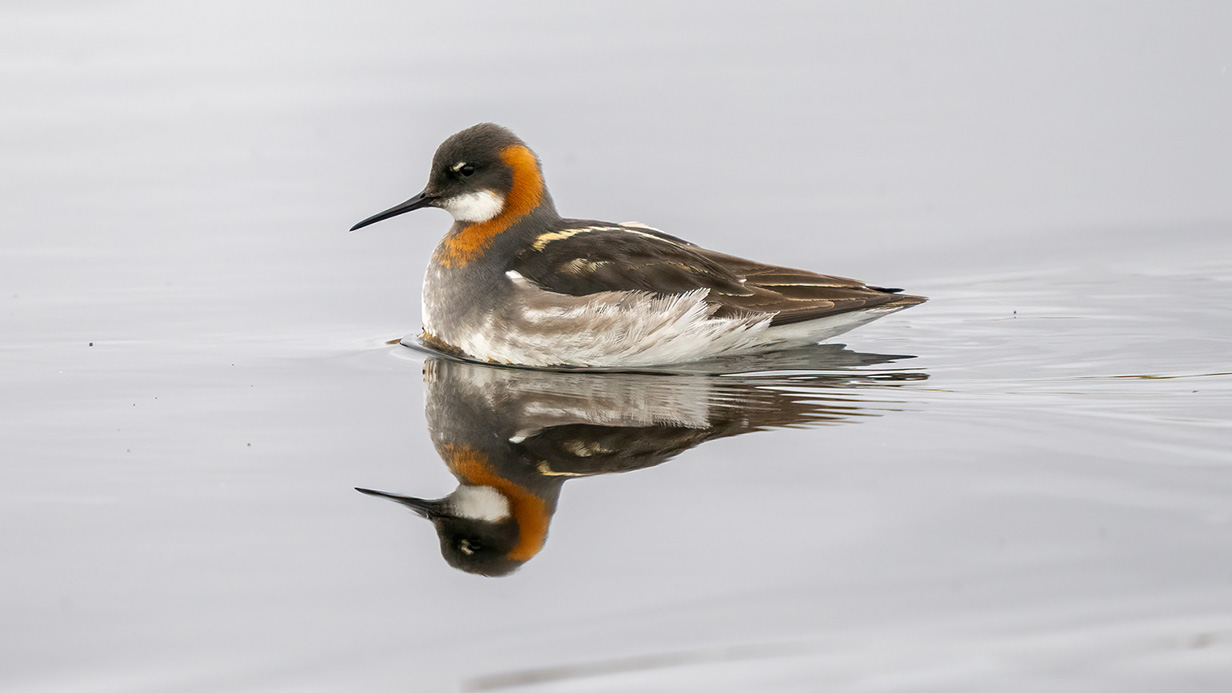
Nome is full of fascinating species. There are only several roads to drive so the plan is simple, drive these roads at strategic times in order to photograph as much as possible. Target species for these roads are; Willow and Rock Ptarmigan, Bluethroat, Arctic, Blackpoll, Yellow, and Wilson’s Warbler, Northern Waterthrush, Fox, White-crowned, Golden-crowned and American Tree Sparrows, Gray-cheeked Thrush, Northern Wheatear, Lapland Longspur, Hoary and Common Redpoll, Rough-legged Hawk, Long-tailed Jaeger, Aleutian Tern, Red-throated Loon, Eastern Yellow Wagtail, and a host of shorebirds like; Pacific and American Golden Plover, Surfbird, Red Knot, Whimbrel, Semi-palmated Sandpiper, Western Sandpiper, Semi-palmated Plover, Black-bellied Plover and Red-necked Phalarope. And we of course keep our eyes out for the desirable mammals like the striking Musk Ox.
Depending on our departure flights from Nome, we may have another morning to do some photography but if not, we will catch our flight back to Anchorage. Because of the unique layout of Alaska, there are no direct flights from Nome to Utqiagvik so we have to return to Anchorage. There is also only one flight per day to each location so depending on flights, we may be forced to spend 24hrs or so around anchorage. If this is the case, we will get another rental car for the 24hrs and see what else we can photograph around anchorage or nearby hotspots.
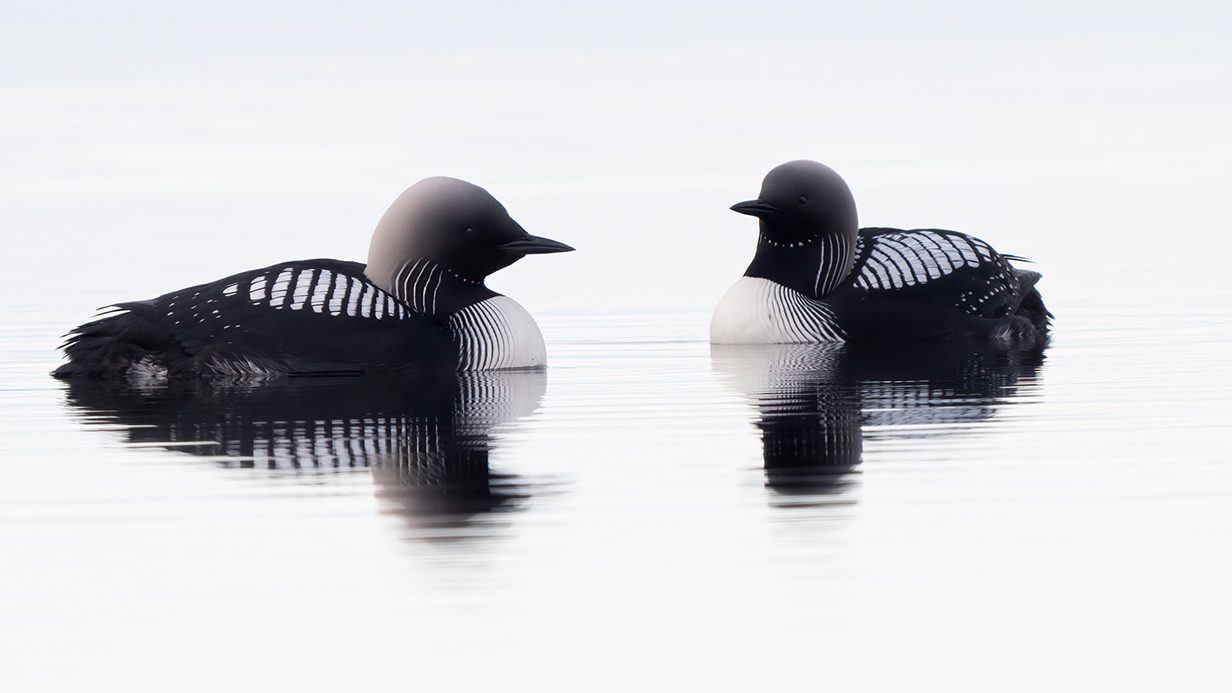
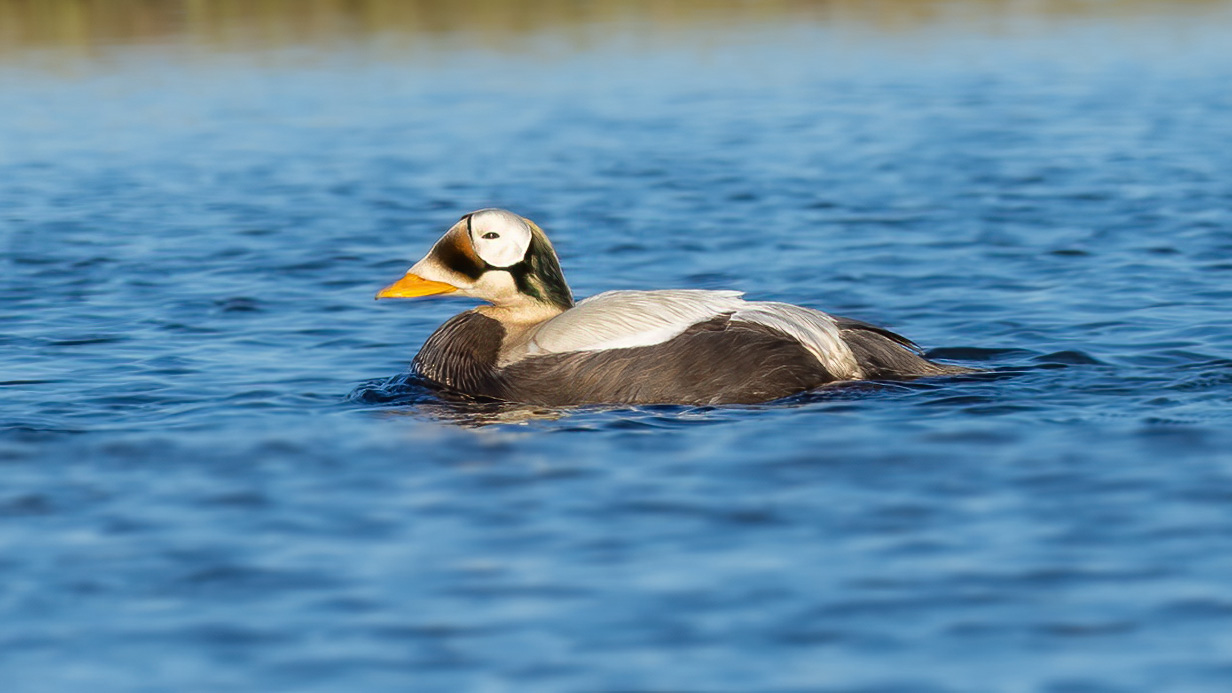
Today we head up to Utqiagvik (formally Barrow). Upon arrival, we will grab our rental vehicle, check into the hotel and again, let the heat and midday light dissipate. We will grab our dinner and then head out for some great bird photography. Utqiagvik is a really cool place. Boggy Tundra attracts a variety of species and due to the 24 hour daylight, we can photograph to our hearts desire. Birds like; King, Steller’s, and Spectacled Eider, Snow Bunting, Lapland Longspur, Hudsonian Godwit, Red and Red-necked Phalarope, Dunlin, Pectoral Sandpiper, Long-billed Dowitcher, Greater White-fronted Goose, Northern Pintail, Long-tailed Duck, Pacific Loon and other potential (but harder) birds like Snowy Owl, Pomarine and Parasitic Jaeger and Sabine’s Gull. The next five nights will be spent in Utqiagvik. Day 9-12: UtqiagvikWe have four full days based in Utqiagvik in order to maximize chances of getting fantastic photos of all the special birds.
We have four full days based in Utqiagvik in order to maximize chances of getting fantastic photos of all the special birds.
Depending on our departure flights from Utqiagvik, we may have another morning to do some photography but if not, we will catch our flight back to Anchorage. A night will be spent in Anchorage, before departures out the next day, for those not joining the St. Paul extension.
The tour ends this morning. The hotel has a free airport shuttle, so you can leave whenever you wish.
Day 1: Arrival in Anchorage
The tour will begin on this afternoon. Guests should arrive before 4pm on this day or plan to arrive a day earlier. We will go to a local park around Anchorage to look for a couple of target species like, Boreal Chickadee, Ruby-crowned Kinglet, Orange-crowned Warbler, and most importantly Spruce Grouse, our biggest target. A single night will be spent in Anchorage.
Day 2: Anchorage to Nome
Depending on our flight time to Nome we will either kill a few hours in the morning targeting more species near Anchorage or we will go directly to the airport to go to Nome. Once we arrive in Nome, we will pick up our rental vehicle, check into our hotel, allow for the midday heat and light to dissipate, then grab an early dinner and begin our exploration of the area in the gorgeous evening light. The next four days will be spent in Nome.
Days 3-6: Nome
Nome is packed with fascinating species. There are only three major roads that span out from Nome, and so the driving plan is simple. However, the birdlife found on each differs significantly, so we will need to cover them all. Our plan for these days is to drive these roads at strategic times (when the light is best) in order to photograph as much as possible.
Roadside target species include, Willow and Rock Ptarmigan, Bluethroat, Arctic, Blackpoll, and Wilson’s Warblers, Fox and Golden-crowned Sparrows, Northern Wheatear, Lapland Longspur, Redpoll, Rough-legged Hawk, Long-tailed Jaeger, Aleutian Tern, Red-throated Loon, Eastern Yellow Wagtail, and a host of shorebirds in their breeding refinery like, Pacific and American Golden-Plovers, Surfbird, Red Knot, Hudsonian Whimbrel, Semi-palmated and Western Sandpipers, and Semi-palmated and Black-bellied Plovers. We will also, of course, keep our eyes out for desirable mammals like the hulking Musk Ox. All of these nights will be spent in Nome.
Day 7: Nome to Anchorage
Depending on the time of our departing flights, we may have another morning around Nome to do some photography but if not, we will catch our flight back to Anchorage. There are no direct flights from Nome to Utqiagvik (formerly known as Barrow), so we will need to return to Anchorage first, before flying there on the following day. Depending on flight schedules, this may necessitate us to have 24 hours in Anchorage. If this is the case, we will get another rental vehicle and see what else we can photograph around some nearby hotspots to Anchorage. There will be plenty on offer there if needed! Another night will be spent in Anchorage, whatever the flight schedules turn out to be.
Day 8: Anchorage to Utqiagvik (formerly Barrow)
Today we head up to Utqiagvik (formally known as Barrow). Upon arrival, we will grab our rental vehicle, check into the hotel, and again, let the heat and midday light subside before heading out for our first photo shoot after an early dinner. Utqiagvik is a really cool place. Boggy Tundra attracts a variety of species and due to the 24-hour daylight, we can photograph to our hearts desire. Birds like, King, Steller’s, and Spectacled Eiders, Snow Bunting, Lapland Longspur, Red and Red-necked Phalaropes, Dunlin, Pectoral Sandpiper, Long-tailed Duck, and Pacific Loon call this place home. Other tougher target birds are possible, like Snowy Owl, Pomarine and Parasitic Jaegers, and Sabine’s Gull. The next five nights will be spent in Utqiagvik.
Day 9-12: Utqiagvik
We have four full days based in Utqiagvik in order to maximize chances of getting fantastic photos of all the special birds. There are plentiful targets and photographers often fall in love with this place due to the sheer abundance of photo opportunities from the door of the hotel to further afield. The guides will be up to date with where the ice has melted first, as these pockets of open water can be a big draw to the hordes of waterfowl that visit Arctic Alaska to breed in this season.
Day 13: Utqiagvik to Anchorage
Depending on our departure flights from Utqiagvik, we may have a further morning to do some photography there but if not, we will catch our flight back to Anchorage. A night will be spent in Anchorage, before departures out the next day, for those not joining the St. Paul extension.
Day 14: Departure from Anchorage
The tour ends this morning and there is no photography planned for this day. The hotel has a free airport shuttle, so you can leave whenever you wish.
IMPORTANT INFO ABOUT THIS TOUR
While many of the subjects on this tour can be photographed with relative ease, a significant number of species will require some more effort/equipment to get the best close ups. If you want to make the most of this tour, you will be required to walk through some of the tundra. The tundra around Nome is made up of grassy tussocks which can make for difficult walking, but it is not dangerous, just somewhat strenuous. For off road activities, we will usually never walk more than about 1/2 mile or so but keep in mind the walking won’t be on flat, level ground. The tundra around Utqiagvik is boggy and can sometimes be a little slippery but is less strenuous than Nome. Additionally, WADERS ARE VERY HIGHLY RECOMMENDED to make the most of this tour. This allows you to get the best shots of the waterfowl in particular, which are not always right beside the road. If you do not bring waders, as you prefer not to do these walks, PLEASE BRING RUBBER BOOTS, AS IT CAN BE VERY MUDDY IN BARROW AND YOU WIL BE ABLE TO WADE INTO SOME SHALLOW WATER TOO.
The meal plan on this tour is a little different than normal tours because of the photography schedule. We will have a brunch (around 10:30am) and then a dinner (around 5:30pm). There will be plenty of snacks to supplement in between. The sleep schedule is also very different to normal tours. During this time of year, Alaska is mostly daylight, so the “golden hours” are a lot different than normal locations. Your rough schedule will be; Photography from about 5:30am – 10am, Brunch, Sleep (as if it were nighttime), wake up for dinner (around 5:30pm), then photography until about 12:30am, then a nap from about 1am to 4:30am and repeat. It is essentially a reversal of a normal sleep-nap schedule but is the best way to do northern Alaska.
PLEASE NOTE: Utqiagvik is a strict, dry town and there are severe, very high fines if found with alcohol. So, please understand you will not be able to consume alcohol during this part of the tour. This applies only to Utqiagvik.
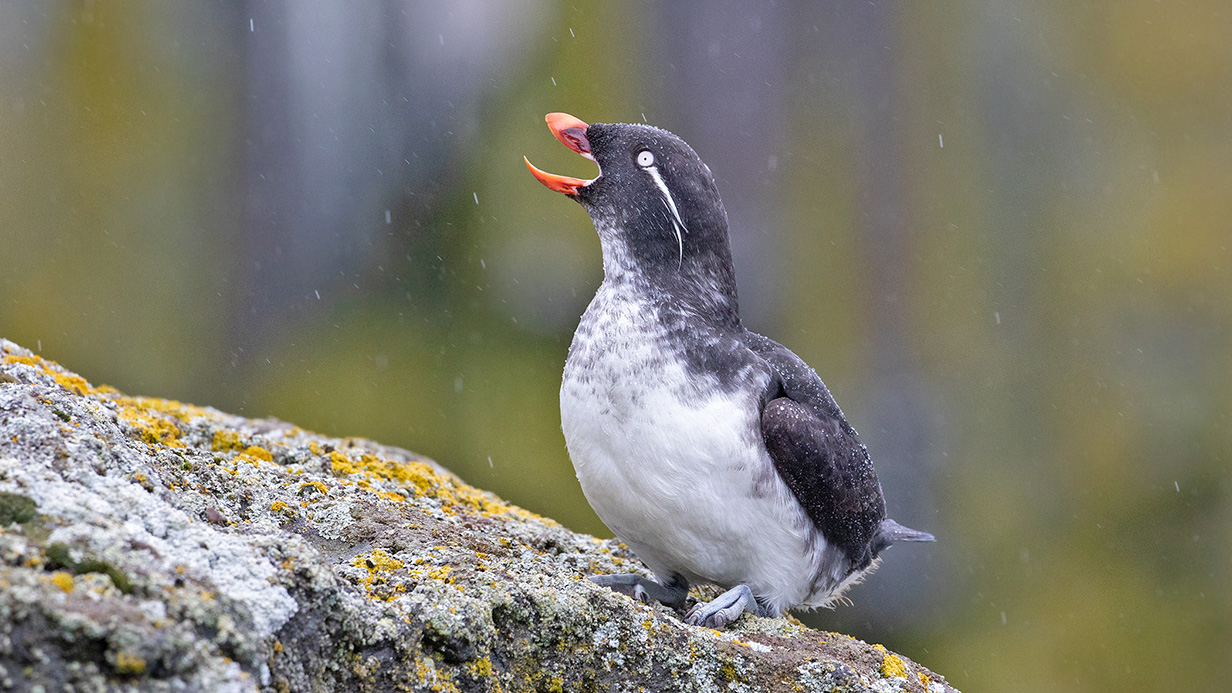
Have you ever dreamed of an island full of breeding alcids? Where Tufted and Horned Puffin, Least, Parakeet, and Crested Auklets, Common and Thick-billed Murre, a host of gulls and the gorgeous Red-faced Cormorant and highly sought after Rock Sandpiper all breed and showcase their best plumages and songs? Then this island could be just what you’ve been looking for. This is also one of the best places for Arctic Fox and Northern Fur Seal, and the island also has a conspicuous songbird in the form of Gray-crowned Rosy-Finch, which is absent from the mainland tour sites. While on St. Paul, we will also enjoy lava rock cliffs, epic rolling hills covered in wildflowers and of course, the stunning sights and sounds of the raging sea below. It is a great way to round out this already awesome tour. Three or four full days will be spent on the island (dependent on changing flight schedules), allowing plenty of time to focus on getting the very best photos of the St Paul specialties, most of which are not available on the main tour.
Day 1: Anchorage to St. Paul
We will take a morning flight out of Anchorage to the island of St. Paul, where we will spend 4 nights. This day is also the departure day for the main tour.
Days 2-5*: St. Paul
Several full days will be spent photographing birds on St. Paul. The exact number of days depends on which days of the week flights are available, and the schedules change frequently. Based on current schedules, we plan to have four full days on St. Paul, though sometimes this may be a day shorter, if schedules dictate.
Day 6: St. Paul to Anchorage
We will depart St. Paul for Anchorage. After arrival in Anchorage, there are no more activities, and so you are free to leave Anchorage at any time you wish after arrival in Anchorage on this day. Please check with the office about flight schedules from St. Paul before booking your departing flight.
NOTE: All of the details below refer to the main tour only – please contact the office for details of this nature about the extension.
PACE: Easy to Moderate. While we don’t tend to move large distances on any particular day in Alaska, the days are very long (in the Land of the Midnight Sun). The main thing to bear in mind is the strange schedules we will be keeping due to the best light occurring in the middle of the night (see note above for specifics). All main meals (two meals a day – brunch and dinner) will be in good local restaurants, though we will have snacks outside of these times for our early morning, pre-breakfast adventures. There are no especially long drives on this tour, with the longest possibly reaching up to two hours only on a few days only. Most of the roads are in good shape, although there may be some driving on dirt roads for periods too.
PHYSICAL DIFFICULTY: Easy to moderate. You can expect to walk several miles per day, sometimes more, and while the walking is usually easy there are some exceptions. While most of the walking will be along roads, there is some optional (though regular) opportunities to walk in the tundra with waders, to get close ups of any waterbirds that are offroad. While these offroad walks will not be that long (a half a mile or so), they will involve walking through tussocky tundra in Nome, which can be physically challenging, or in very wet tundra around Barrow. For this reason, we suggest bringing WADERS on the tour if you wish to have the very best photo opportunities everywhere. If you prefer not to do this, you can remain on the road while we do this, and there are sure to be other birds available there too. If you do not bring waders, you will need to bring RUBBER BOOTS, to wade into shallow water and for the muddy roads in various places.
CLIMATE: Variable and unpredictable! Anchorage and Nome can sometimes be very pleasant and other times frigid. Barrow is almost always very cold, and you can expect temperatures down to freezing or even below on most days there, as well as possible high winds. Rain and even snow can occur. Alaska often experiences quite a range of conditions throughout late spring and summer, and temperatures can be at times quite warm (even up to a balmy 80°F/27°C in the Anchorage area in some years) to downright cold around Barrow (at times below freezing). Wind is also a prominent feature in coastal Alaska, especially around Barrow, and can make the apparent temperature seem much colder. Normal daytime highs in this season are Anchorage, lows of 40-48 °F and highs of 56-63°F (4.5-9°C and 13.5-17.5°C respectively). In Nome, temperatures are usually between 45-70°F (7-21°C), and in Barrow between 32-55°F (0-13°C). Good, warm winter clothing and good quality rain gear are essential on this tour, as are rubber boots at the minimum, or waders if you would like to walk offroad.
WHEN TO GO: This tour is timed for early summer, when much of the ice has retreated and the open water attracts migrant waterfowl and shorebirds to breed in good numbers. The Arctic summer is brief, and so this narrow window of the season is best for breeding bird activity, and therefore the clear period for best photo opportunities of migrant reeding species. Alaska can also be interesting in the fall, for migrating birds, with the likes of Ross’s Gull among them. We can run custom tours in that season if desired, which would target a different subset of birds compared with the spring.
ACCOMMODATION: Very good to excellent. All of the hotels and motels on the main tour have typically good US amenities, including Wi-Fi, full-time electricity, heating and en-suite facilities. On the St. Paul Extension, there are a limited number of rooms with private bathrooms. We always request these rooms for our clients, but sometimes they are unavailable, in which case bathrooms will be shared between hotel guests, although the rooms are decent and Wi-Fi works well there.
PHOTOGRAPHY: Alaska ranks as among the best photography destinations not just in North America, but in the world, and chances for photos will be abundant throughout the tour. On this excellent photography tour, the chances at all sites for getting good bird photos are very high. In Nome, the nesting shorebirds, jaegers, loons, and sometimes raptors too can provide good shots, while in Barrow the arctic nesting shorebirds like Pectoral Sandpiper, Dunlin and Western Sandpiper, may also be supported by a series of eiders species for mini photo shoots, along with the plentiful tame long-tailed ducks and Greater White-fronted Geese. Both Barrow and Nome have ptarmigans (both Rock and Willow), and Lapland Longspurs, which are all typically tame. Aside from the birds, Muskox may be photographed in Nome. Arguably, the most exciting bird photography of the entire tour is on St. Paul, on the extension, where species like Tufted and Horned Puffins, Least and Parakeet Auklets, Red-faced Cormorants, both Black-legged and Red-legged Kittiwakes, in addition to Rock Sandpipers, and Gray-crowned Rosy-Finches are all near assured on each visit to perform. There are also plentiful chances to photograph the abundant Arctic Foxes and Northern Fur-Seals on the island too.
TRAVEL REQUIREMENTS: For US citizens, no other special requirements are necessary to visit Alaska. Citizens of Canada may enter the US with a valid passport, and do not need to obtain a visa. For citizens of the 42 countries on the visa waiver list (including the UK, Western Europe, Australia, and New Zealand – click here for the full list: https://travel.state.gov/content/travel/en/us-visas/tourism-visit/visa-waiver-program.html ), you can enter the US with a valid passport and a completed Electronic System for Travel Authorization (ESTA), which can be applied for online. For all passports, the passport must be valid for at least six months past your intended stay. Citizens of all other countries will need to apply for a US visa. Travel requirements are subject to change; please double check with the nearest embassy or consulate or ask our office staff if you are unsure.
WHAT’S INCLUDED (MAIN TOUR)?: Accommodation from the night of day 1 to the night of day 13; meals from dinner on day 1 (unless you arrive too late for dinner service) to breakfast on day 14; reasonable non-alcoholic drinks at meals; safe drinking water only between meals; round-trip flight from Anchorage to Nome; round-trip flight from Anchorage to Barrow; Tropical Birding tour leader with audio playback gear from the evening of day 1 to the evening of day 13; ground transport for the group in a suitable vehicle driven by the guide from the morning of day 2 to the afternoon of day 13; airport shuttle bus on day 1 and day 14; tips for included meals; entrance fees to the sites mentioned in the itinerary; a printed and bound checklist to keep track of your sightings (given to you at the start of the tour – only electronic copies can be provided in advance).
WHAT’S NOT INCLUDED (MAIN TOUR)?: Tips other than those for included meals; flights from your home city to Anchorage; snacks; additional drinks apart from those included; alcoholic beverages; travel insurance; excursions not included in the tour itinerary; extras in hotels such as laundry service, minibar, room service, telephone calls, and personal items; medical fees; other items or services not specifically mentioned as being included.
Post-tour extension: Please contact us about what is included and not included in the St. Paul extension.
We will take a morning flight out of Anchorage to the island of St. Paul, where we will spend 4 nights. This day is also the departure day for the main tour.
Two full days will be spent photographing birds on St. Paul.
We will depart St. Paul for Anchorage. After arrival in Anchorage, there are no more activities, and so you are free to leave Anchorage at any time you wish after arrival in Anchorage on this day. Please check with the office about flight schedules from St. Paul before booking your departing flight.
Want to learn more? Fill this form and we’ll be in touch.

Reviews
There are no reviews yet.